On the 2026–2027 faculty job market

Memory circuits
across time and scale.

I study how prefrontal circuits build lasting memories, and how those memories go on to guide behavior.

My research links changes in individual neurons to the shifting roles of brain-wide networks. I also ask when induced plasticity can reshape those networks and the learning that follows.

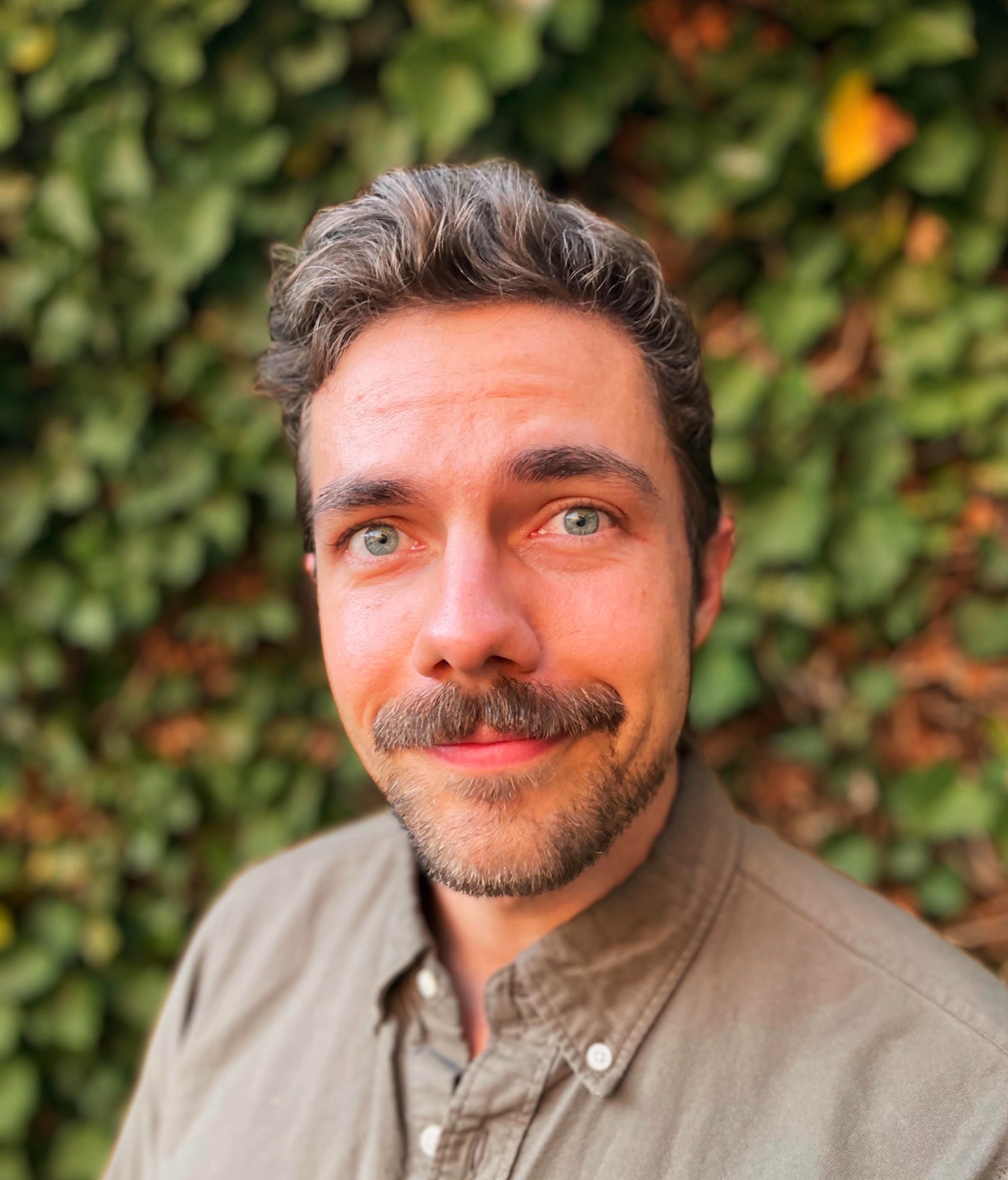
Portrait of Zachary Zeidler
Postdoctoral Scholar · Department of Physiology, UCLA

Research directions

From a transient experience
to an enduring influence.

My lab will study how prefrontal circuits build and coordinate the brain-wide networks behind lasting memories, and how psychedelics and related compounds change those networks and the behavior they drive.

These studies address mechanisms relevant to persistent threat responses in PTSD and, through future collaborations, compulsive seeking in addiction and inflexible negative expectations in depression.

01 · Recruitment

Building a lasting memory

How do local prefrontal circuits select the neurons and pathways that become part of a lasting memory? I will test how memory encoding neurons and local inhibitory populations recruit projection-defined neurons as memories consolidate, and how behavioral control and prior trauma change these rules.

Longitudinal calcium imaging · time-restricted chemogenetics · active avoidance and stress-enhanced fear learning

02 · Coordination

Connecting pathways to behavior

How do branches of the same prefrontal neurons coordinate distinct functions across a distributed memory network? I will identify the target cell types and downstream pathways that produce opposing effects, and test whether prefrontal input during consolidation establishes a region’s later role in recall.

Projection-specific calcium imaging · terminal inhibition · whole-brain axon mapping

03 · Plasticity

Changing learned responses

When does enhanced plasticity support adaptive memory updating? I will test whether circuit organization at the time of treatment determines how psychedelics and related compounds, beginning with the non-hallucinogenic analogue tabernanthalog, alter remote memory and new learning.

Treatment timing × longitudinal imaging · projection-specific spine measurements · extinction and trauma models

Featured research

Revised & resubmitted · Nature Neuroscience

Memories are constant.
Their architecture is not.

As a memory matures, memory encoding neurons recruit a new population of prefrontal projection neurons into the memory network. Two branches of that population then push remote recall in opposite directions.

Tissue from prefrontal cortex showing memory encoding neurons (green), cortically projecting neurons (yellow), and memory recall–active neurons (magenta).
Whole-brain axon tracing of cortically projecting prefrontal neurons active during memory recall reveals targeted innervation of the claustrum, temporal association area, posterior parietal association cortex, and retrosplenial cortex.
  1. Recruited. Memory encoding neurons in mPFC direct the gradual recruitment of neurons projecting to the temporal association area (TEa) into the memory trace.
  2. Necessary. Tracking the same neurons for weeks showed their encoding of memory-related behavior getting stronger, and this pathway becomes necessary for remote recall.
  3. Opposing branches. Whole-brain mapping revealed collaterals from the same neurons to the claustrum. Inhibiting the TEa and claustrum branches had opposing effects on remote recall.
Read the preprint Summary reflects the revised manuscript; the preprint shows the 2025 version.

Experimental & computational expertise

Linking cells, circuits, and behavior.

Track neural activity

Longitudinal one-photon calcium imaging follows identified neurons from learning through remote recall; fiber photometry measures population and neuromodulatory signals.

Identify & test pathways

Activity-dependent labeling, whole-brain clearing and imaging, and targeted optogenetic and chemogenetic manipulations connect anatomy to function.

Model disease-relevant states

Mouse models of psychiatric and neurological disorders connect circuit mechanisms to persistent, maladaptive behavior.

Computational analysis

Single-cell encoding analyses, machine-learning embeddings and decoding, and in silico lesions of functional subpopulations reveal how neurons and ensembles represent cues, context, and behavior.

Build accessible tools

Open-source software and hardware, including BehaviorDEPOT, support reproducible behavioral measurement.

Publications

Selected publications.

About

Zachary Zeidler, PhD

I’m a neuroscientist and neuroengineer at UCLA investigating how prefrontal circuits reorganize to support lasting memories and guide behavior.

As a postdoctoral scholar with Laura DeNardo in the Department of Physiology, I combine longitudinal neural recordings, circuit mapping, and targeted manipulations to study how memories mature, and how prefrontal dopamine supports learning to avoid threat.

During my PhD with Esther Krook-Magnuson at the University of Minnesota, where I minored in neuroengineering, I studied how cerebellar perturbations alter hippocampal activity and memory, and developed a mouse model of ventral hippocampal epilepsy. My research has been supported by NIMH, NINDS, and NSF.

Training

  • 2020–presentUniversity of California, Los AngelesPostdoctoral Scholar, Physiology · Advisor: Laura DeNardo
  • 2014–2020University of MinnesotaPhD, Neuroscience · minor, Neuroengineering · Advisor: Esther Krook-Magnuson
  • 2013–2014National Institute of Mental HealthPostbaccalaureate trainee · Advisor: Carolyn Beebe Smith
  • 2008–2012Colorado CollegeBA, Neuroscience, cum laude

Recognition

  • 2026Scheibel Postdoctoral Lecture AwardBrain Research Institute, UCLA
  • 2025Society for Neuroscience MinisymposiumInvited speaker
  • 2025Pavlovian Society Annual MeetingInvited speaker
  • FundingNIMH · NINDS · NSFPostdoctoral and predoctoral research support

Teaching & mentoring

I have lectured to undergraduate and graduate students in Biology of Learning and Memory at UCLA and Human Neuroanatomy at the University of Minnesota, and mentored seven undergraduate and graduate researchers, most of whom are co-authors on my papers. I help trainees become independent by having them present their research early and often.

Building scientific community

I co-founded UCLA SYNCS, a postdoc seminar series that invites speakers for their science and for what they give back, such as open-source tools or public outreach. As chair of UCLA’s Postdoctoral Research Union, I advocated for more than 1,000 postdoctoral scholars and helped secure a childcare stipend for postdocs across the University of California system. Strong science depends on strong communities, and I am dedicated to building them in the lab, across a department, and throughout the field.

Contact

Let’s talk science.

Department of Physiology
David Geffen School of Medicine at UCLA
Los Angeles, California

Research image